




This is the first of what may become a series. On Work In Progress Night a foulaber will bring a work in progress to the lab and work on it for a few hours. Anyone interested can drop in to check it out and discuss the project, receive or give advice, or bring a similar project and work on it. There is no promise that anything will actually work, but it should be fun!!!
While the idea of putting a couple steppers on an etch a sketch to produce etch a sketch drawings seems straightforward, there are actually a number of tricky points. There is quite a bit of mechanical backlash in the sketch, meaning that the order in which you draw lines makes a lot of difference. The image processing required to generate a scene which can be drawn in a single line from a picture is also interesting.
Cost: Free, although pass-the-hat style donations to support the lab are encouraged.
Wednesday Oct. 2, 18:30-22:00
Cost: Free, although pass-the-hat style donations to support the lab are encouraged.
Wednesday Dec. 4, 18:30-22:00
On Work In Progress Night a foulaber will bring a work in progress to the lab and work on it for a few hours. Anyone interested can drop in to check it out and discuss the project, receive or give advice, or bring a similar project and work on it. There is no promise that anything will actually work, but it should be fun!!!
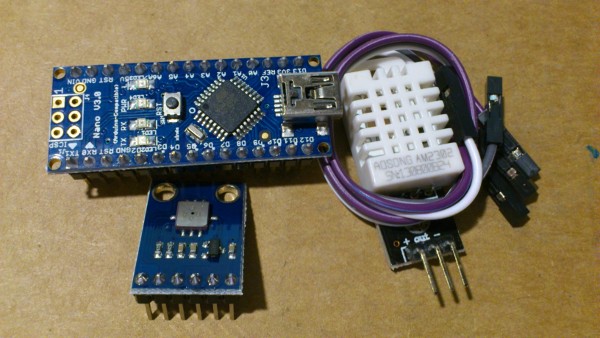
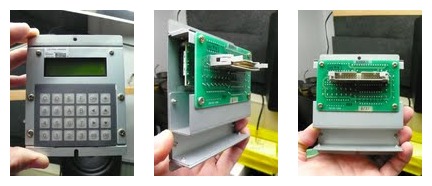
Gapzap recently scored some righteous looking lcd panels. It would be cool to include them as part of an Arduino workshop. However, we first have to figure out how they work. Time permitting, may also work on a few other Arduino related items, e.g. bootloader flashing. If you have Arduino projects, drop on down.
Wednesday, Oct. 9, 18:30-22:00
On Work In Progress Night a foulaber brings a work in progress to the lab and works on it for a few hours. Anyone interested can drop in to check it out and discuss the project, receive or give advice, or bring a similar project and work on it. There is no promise that anything will actually work, but it should be fun!!!
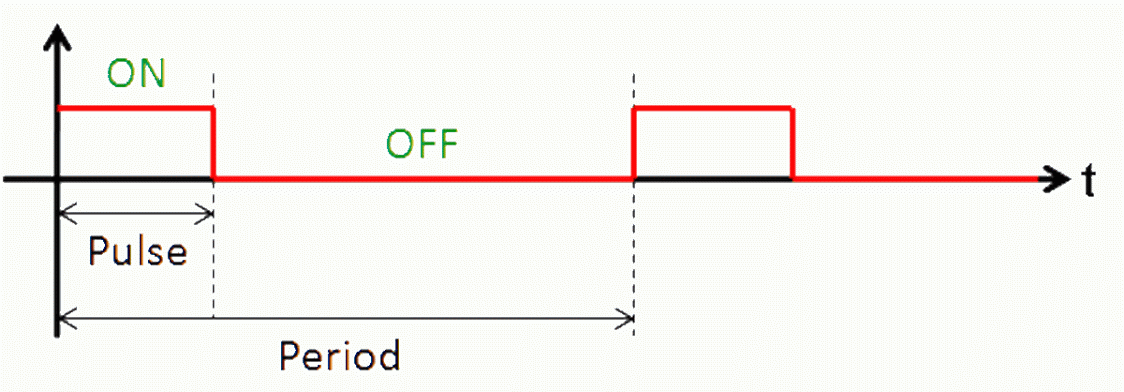
First evening dedicated to design of a PWM (pulse wave modulation) power control module.
Every good hacker sooner or later will require a pulse wave modulated power source. To simplify the project, we will focus on the controller and modulator (MOSFET). The module can then be connected to a power supply of your choice. We are aiming to construct a controller that can handle from 3 to 80 V at frequencies from 10Hz to 50kHz and currents of 20A or more.
When: 12 jan 2015 19h-22h
Where: Foulab
Everyone who is interested by this project is welcome.
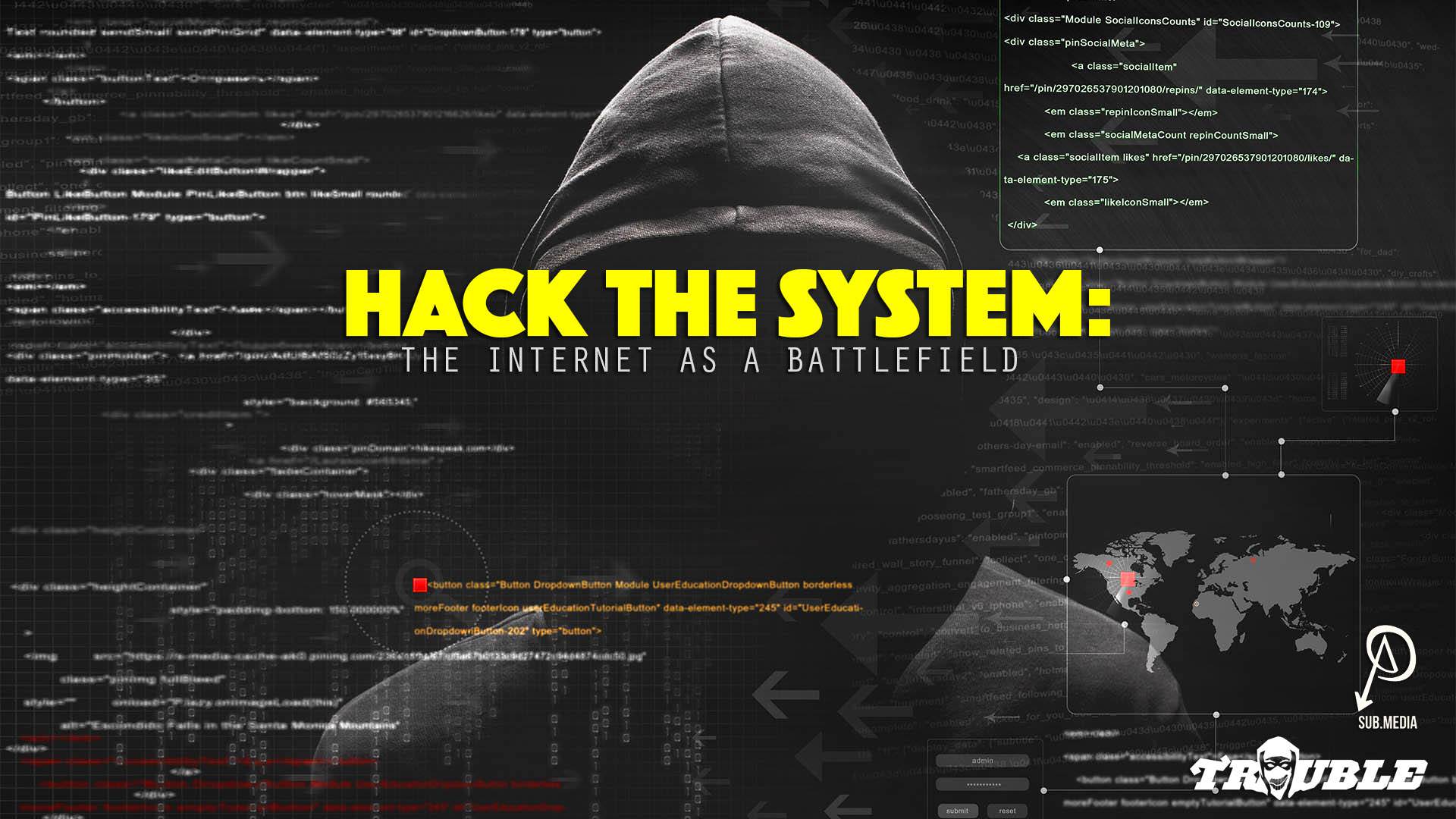
Join us for a screening of the season finale of “Trouble” and “the very muthalovin’ best of the stimulator” and stay for an end of year party with DJ Morgan Peni and the stimulator.
Pay What You Can - No one turned away for lack of money.
Every day, more and more of our activities and communications take place online. We’ve become addicted to connectivity. To constant access to an endless catalogue of information, entertainment and engagement, all available at the click of a button. The Internet has become deeply ingrained into all facets of our lives, to the point where it often seems like a neutral appendage to reality itself – a “digital commons” where billions of global citizens hold the keys to a vast, decentralized, library of human knowledge.
But in reality, the Internet is far from neutral… and it’s certainly not a commons. The server farms and fiber optic cables that make up the Internet’s physical infrastructure are increasingly owned, operated and controlled by a small handful of incredibly powerful corpo rations. Social Media platforms have become sites of mass indoctrination and anchors of social control. Liberal democratic societies are under attack from Russian trolls. We are at the dawn of a new era in history, in which states wage covert and perpetual cyber warfare against one another, with real world consequences that are hidden and unknown.
Many of us choose to avoid these harsh truths, pleading ignorance of how technology works, and gladly immersing ourselves in the spectacle that it creates. But there are also those who are inexorably drawn to seeking out a better understanding of how the complex mechanics of power operate in our digital age… and how that power might be harnessed for our own ends.
In this month’s episode of Trouble, sub.Media talks to a number of hackers and digital security experts, as they share their experiences and offer tips on how to best to navigate the battleground of the Internet.
Having the computer speak is key to human-like communication. However, the set of voices available for text-to-speech system (TTS) is limited. In this workshop we will be building a voice for the open source FestVox/Festival TTS that you record. The computer talks like you! (Or whomever you convince to record the prompts for you – your dog?).
The workshop is also a hands-on introduction to the free book “Building Synthetic Voices” that comes with Festival TTS.
You don’t need programming knowledge but you need some Unix knowledge. If you want to extend the recipes we will see in the workshop you will need to learn Scheme which is the programming language for extending Festival.
The workshop presentations will be in English, but we are more than happy to provide support and answer questions in French. Moreover, we will only cover generating English voices, as we are following the default tooling provided by FestVox. We hope to cover French synthesis in a later workshop.
We will cover:
- How to install and set-up Festival/FestVox/Edinburgh Speech Tools
- Overview of the full Festival TTS stack
- How to design prompts for limited domain TTS (reduced vocabulary)
- A full example in the bicycle safety domain that you’ll record during the workshop. (Hear it synthesized with Pablo’s voice here.)
- Introduction to diphone (large vocabulary) recording and synthesis (no diphone recording will take place during the workshop, though)
This workshop is just the beginning, potential follow-ups include French synthesis, differentiated intonation recordings or any other topic that interests the group. If you have a project that uses speech synthesis (or might benefit from it) bring a demo and we can hear it at the end of the workshop.
Requirements:
- A computer with a unix-like environment (GNU/Linux, Mac OS X or cygwin) capable of doing sound recording.
- RSVP to pablo.duboue (at) gmail.com required. Space is limited.
- Cost: $10 (all proceedings from this workshop will be donated to Foulab)
When?
Saturday, January 24th at 15h (about 3 hours in length)
Where?
Foulab, of course!
WHEN:
March 12th,
PRICE: FREE! (donations encouraged)